

Algeria Travel Guide: Historical Places You Must See
By GotoeSIM · July 24, 2026
Last updated: May 2025 | Written by Sofia Mansour, a Mediterranean-based travel writer who has spent over six years reporting on North African heritage sites and border-crossing logistics.
Algeria is one of North Africa's best-kept travel secrets. It's the largest country on the continent, and it packs in Roman ruins, Ottoman architecture, Saharan landscapes, and coastal cities that rarely make it onto anyone's Instagram feed. This Algeria travel guide walks through the country's most fascinating historical sites, plus the practical stuff — like entrance fees, opening hours, and how to stay connected without getting hit by roaming fees.
I first visited Timgad on a whim after a work trip to Algiers, expecting a quiet ruin and maybe an hour of wandering. Four hours later I was still tracing the outlines of the old forum, completely alone except for a shepherd moving his flock through the ancient streets. That's Algeria in a nutshell — world-class history with almost none of the crowds you'd fight through in Rome or Marrakech.
Why Algeria Deserves a Spot on Your Travel List
Despite its size and history, Algeria stays far less crowded than neighboring Morocco or Tunisia. You can wander through ancient sites practically alone. From Roman cities frozen in time to golden Saharan dunes, Algeria gives history-hungry travelers exactly what they're after — without the tour bus traffic.
Top Historical Places to Explore in Algeria
Timgad – The Roman City in the Desert
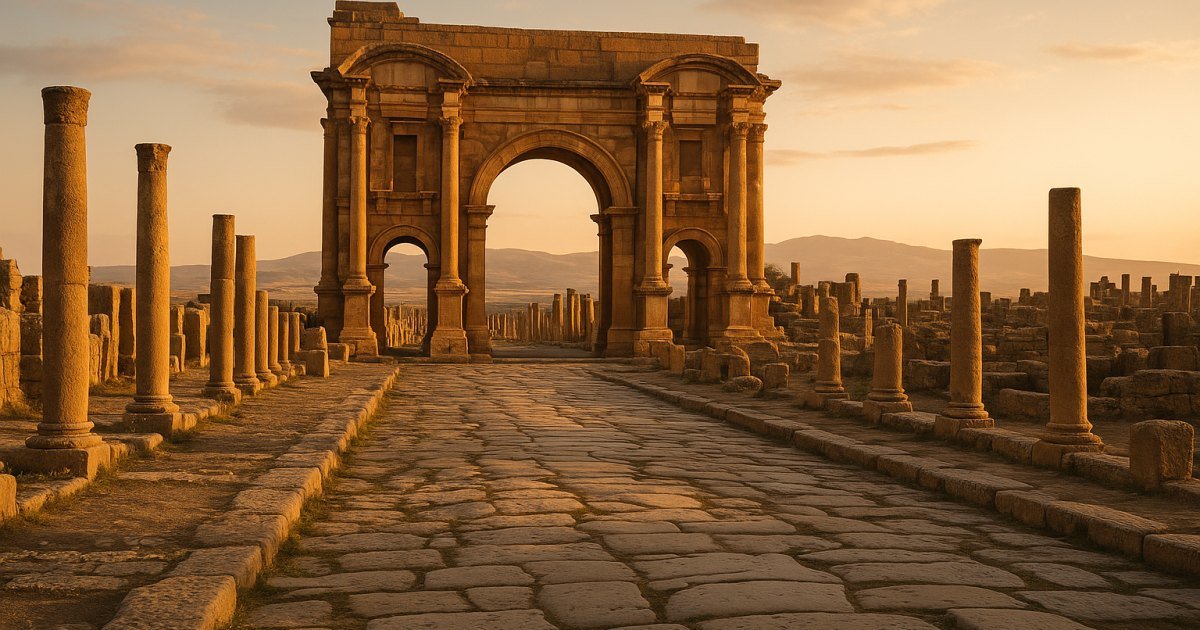
People call it the "Pompeii of Africa," and once you're standing in it, you'll understand why. Timgad is a remarkably preserved Roman city founded around 100 AD. Walk its grid-patterned streets and you'll pass a triumphal arch, a Roman theater, and public baths that once served thousands. It's a UNESCO World Heritage Site and one of the most complete Roman ruins anywhere in the world.
Practical details: Timgad sits about 35 km from Batna, the nearest major city, and is reached by taxi or rental car in roughly 40 minutes. The site is typically open daily from around 8:00 AM to 5:30 PM (later in summer), with an entrance fee of a few hundred Algerian dinars for foreign visitors — small change for what you get. Spring (March–May) and autumn (September–November) are the best times to visit, since summer heat on the exposed plateau can be brutal by midday.
Djémila – Ruins Among the Mountains
Set high in the mountains, Djémila is another standout Roman settlement. Its temples, basilicas, and mosaics sit against a peaceful, scenic backdrop that feels a world away from typical tourist stops. The mosaics in its small on-site museum rank among the finest examples of Roman art found anywhere in North Africa.
Practical details: Djémila is roughly 50 km from Sétif, the closest city with reliable transport links, and best reached by hired car or a private driver since public transit is limited. Opening hours generally run 8:00 AM to 5:00 PM, with a modest entrance ticket covering both the ruins and museum. Because of the elevation, visit in late spring or early autumn to avoid both winter chill and summer haze.
Casbah of Algiers
Skip the Casbah of Algiers and you've skipped the heart of the country. This historic district, also a UNESCO World Heritage Site, is a maze of narrow alleys, Ottoman-era palaces, and traditional homes overlooking the Mediterranean. It played a key role in Algeria's fight for independence, and it still feels like a living, breathing piece of that story.
Practical details: The Casbah sits right in central Algiers, so no long-distance travel is needed — just a taxi or short walk from most downtown hotels. It's an open neighborhood rather than a ticketed site, so there's no formal entrance fee, though hiring a local guide (recommended for navigating the alleys and understanding the history) typically costs a small daily rate. Visit in the cooler morning hours, and year-round works fine, though spring and autumn afternoons are the most pleasant for wandering.
Tipasa – Ruins by the Sea
Want history with a coastal view thrown in? Tipasa delivers. This ancient Phoenician and later Roman port city sits right along the Mediterranean, mixing crumbling columns and old basilicas with genuinely stunning sea views. History lovers and photographers both tend to linger here longer than planned.
Practical details: Tipasa is about 70 km west of Algiers, easily reached by a scenic hour-long drive along the coast. The archaeological park is usually open from 8:00 AM to 6:00 PM, with a small entrance fee for foreign visitors. Late spring through early autumn is ideal, when you can pair the ruins with a swim at the adjacent beaches.
The Sahara and the Ahaggar Mountains
Algeria's Sahara is more than sand dunes. The Ahaggar Mountains in the south hold ancient rock art dating back thousands of years, alongside dramatic volcanic landscapes. Tassili n'Ajjer, another UNESCO site, features prehistoric cave paintings that hint at what life looked like in the Sahara long before it turned to desert.
Practical details: Both regions are accessed via flights into Tamanrasset (for Ahaggar) or Djanet (for Tassili n'Ajjer), followed by organized 4x4 excursions — independent travel isn't practical or permitted in most areas. Guided multi-day trips are mandatory for Tassili n'Ajjer and should be booked in advance. The best window to visit is October through March, avoiding the extreme summer heat that can exceed 45°C.
Practical Tips for Traveling in Algeria
- Visas are required for most international travelers, so check requirements well ahead of time.
- Cash is still king outside major cities, so carry local currency.
- Modest dress goes a long way, especially at religious or historical sites.
- Hire a local guide for remote historical sites like Tassili n'Ajjer — it's worth it.
- Data connectivity can be spotty in remote desert regions, so plan ahead for navigation and communication.
Staying Connected While Exploring Algeria
Whether you're navigating the Casbah's winding streets or coordinating a desert tour, reliable internet makes travel smoother and safer. Instead of gambling on unpredictable Wi-Fi or eating costly roaming charges, plenty of travelers now grab an eSIM and have data the second they land. If you're new to the concept, this guide on what an eSIM is and how it works breaks down the basics before your trip.
GotoeSIM makes this easy. You get instant eSIM delivery straight to your phone, a one-tap install, and coverage across 190+ countries, including Algeria. Plans start as low as $0.42, and if you don't end up using your eSIM, GotoeSIM refunds unused ones. For Algeria specifically, a few affordable options stand out:
- Algeria 100MB 7Days — $0.45, great for light use like maps and messaging
- Algeria 500MB/Day — $0.75, ideal for daily browsing and photo uploads
- Algeria 500MB 7Days — $0.9, a solid balance for a week-long trip
If you're planning a trip and want to skip the hassle of hunting down a local SIM card, browse and activate a plan in minutes at GotoeSIM's Algeria eSIM plans before you even board your flight. Exploring another region after Algeria? Check out this historical places in Albania travel guide for another underrated destination worth adding to your itinerary.
Final Thoughts on Visiting Algeria
Algeria blends Roman history, Ottoman heritage, and natural beauty in a way few countries can match. From the ruins of Timgad to the winding alleys of the Casbah, this country rewards travelers curious enough to venture off the beaten path. With a bit of planning — including staying connected through an affordable eSIM — your Algeria trip can be smooth, safe, and genuinely unforgettable.
FAQ
Is Algeria safe for international travelers?
Algeria is generally safe for tourists, especially in major cities and well-known historical sites. As with any destination, check current travel advisories and avoid remote border regions unless you're traveling with an experienced guide.
Do I need a visa to visit Algeria?
Most international travelers need a visa to enter Algeria. Requirements vary by nationality, so check with the nearest Algerian embassy or consulate well before your trip.
What's the best way to get mobile data in Algeria?
An eSIM is one of the easiest options since it activates instantly without needing a physical SIM card. Services like GotoeSIM offer affordable Algeria data plans, such as the 500MB 7Days plan for $0.9, that you can set up before you even land.
What is Algeria known for?
Algeria is known for its exceptionally well-preserved Roman ruins like Timgad and Djémila, the historic Casbah of Algiers, vast Saharan landscapes, and prehistoric rock art in the Tassili n'Ajjer region. It's also one of North Africa's largest and least-visited countries, which means many of its landmarks feel remarkably untouched.
Is Algeria good for solo travelers?
Solo travel in Algeria is doable but requires more planning than neighboring countries, especially for remote desert regions where guided tours are mandatory. Major cities and coastal historical sites like Tipasa and the Casbah are generally straightforward for solo visitors who take standard precautions and dress modestly.
Ready to travel connected?
Instant eSIM data for 190+ countries. One-tap install, no roaming bills.
Browse eSIM plansOr get the GotoeSIM app